Planning a Non-Emergency Hospital Discharge Ride in Boston

A discharge pickup needs a confirmed ready-time window, the right vehicle, an exact entrance, and a clear handoff plan. Use this Boston-area checklist.
To plan a non-emergency hospital discharge ride in Boston, confirm the discharge-ready window, the exact pickup entrance, the passenger's mobility needs, and the vehicle before relying on a pickup. AVI schedules wheelchair-accessible transportation and ambulatory transportation; reservations must confirm the specific route, vehicle fit, and availability.
A discharge time can change while paperwork, medication instructions, or a final check is completed. A ride reservation does not mean a vehicle can wait indefinitely, and an ordinary scheduled ride is not a substitute for an ambulance or medical transport that provides care during the trip.
Ask the care team what kind of ride is appropriate
Before booking, ask the hospital's discharge planner or care team what transportation level the patient needs. Can the passenger walk and transfer into a standard vehicle, or must they remain in a wheelchair? Is a companion needed at pickup or at home? If the passenger needs a stretcher, clinical monitoring, or other medical support during travel, ask the care team to arrange an appropriate medical transport instead of assuming a non-emergency ride can provide it.
Confirm the pickup window and the hospital entrance
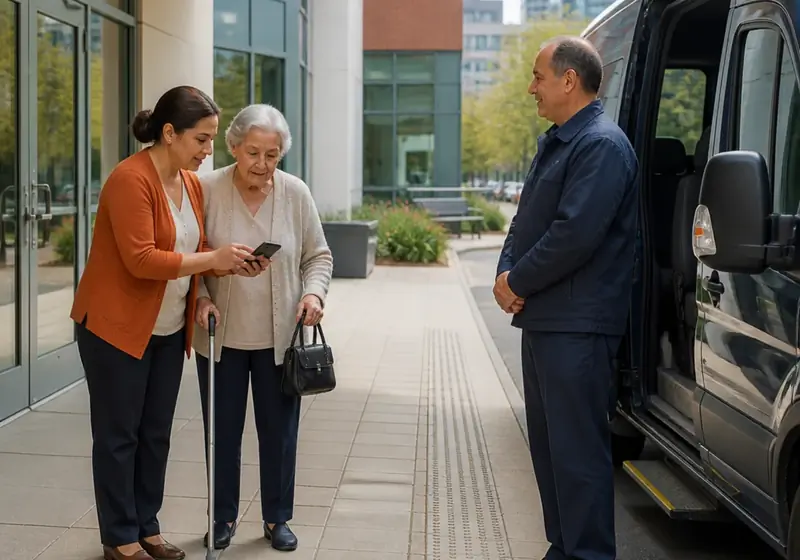
Hospitals may use a discharge lounge, a particular building entrance, or a designated curbside area. Give reservations the facility name, street address, building or department, entrance instructions, and a contact number for the person coordinating pickup. Ask the hospital when the passenger is expected to be ready, then confirm a pickup window with the transportation provider.
- The discharge-ready estimate and the time AVI confirms for pickup.
- The hospital building, discharge area, or curbside entrance to use.
- The passenger's home address and any building-entry instructions.
- Whether the passenger walks, transfers, or remains in a wheelchair or scooter.
- Any companion seat, boarding help, or handoff at the destination that must be confirmed.
- The best phone number for the caregiver and the hospital contact.
Choose the vehicle based on the passenger's needs
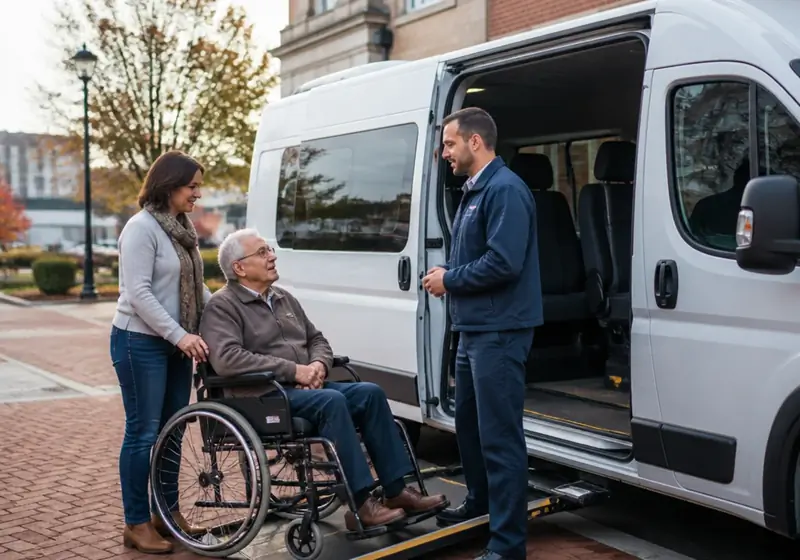
For an ambulatory ride, the passenger needs to be able to walk and transfer into a standard vehicle with no or light assistance. For a wheelchair-accessible ride, tell reservations whether the passenger will stay in a manual wheelchair, power chair, or scooter and share the device's dimensions. Vehicle configurations vary, so have AVI confirm fit and availability for the requested trip rather than assuming every accessible van fits every device.
Make the handoff plan explicit
Confirm who will meet the passenger at the hospital, who will be at the destination, and whether a family member or caregiver needs a seat. Ask what pickup and drop-off assistance is included in the specific reservation. Do not assume a driver can enter a hospital unit, escort someone through a building, or provide care beyond the service AVI has confirmed.
Check coverage separately from the ride request
MassHealth transportation has its own eligibility and authorization process. See MassHealth's member guide to non-emergency transportation for details about covered services, including certain discharge trips through the state brokerage. That process is separate from booking a private AVI ride: confirm eligibility and the assigned provider with MassHealth or the health plan, and do not assume a private reservation will be reimbursed.
When a scheduled ride is not the right option
If the patient has a medical emergency, call 911. If the care team says the patient needs a stretcher, medical monitoring, or another level of support during the trip, ask the hospital to arrange the appropriate transport. AVI provides scheduled non-emergency rides and does not determine whether a patient is medically ready for discharge.
A short checklist before discharge day
- Ask the care team what type of transportation is appropriate.
- Request the discharge-ready estimate and exact pickup entrance.
- Tell AVI the pickup and home addresses, mobility needs, and companion plan.
- Confirm the vehicle, pickup window, availability, and payment arrangements.
- Keep the caregiver and hospital contact numbers available in case timing changes.
To ask about a Boston-area discharge trip, call AVI reservations at +1 (857) 416-9394 or contact us with the trip details. A request is confirmed only after AVI verifies the route, vehicle, and availability.
Ready to schedule a ride?
AVI's regular service area includes Boston, Cambridge, Brookline, Newton, Quincy, Norwood, Dedham, Needham, Westwood, Canton, and Milton. Call AVI to confirm trips outside these communities.
Request a hospital discharge ride